Senior Citizens' Savings Scheme (SCSS) Guide
By Abhishek Kumar · Last Updated Date: 20-10-2026

In short: the Senior Citizens' Savings Scheme (SCSS) is a government small savings scheme for people aged 60 and above, and for some early retirees. You make one deposit of ₹1,000 to ₹30 lakh, it earns a fixed rate of interest paid every quarter, and it runs for five years, after which you can extend it in blocks of three years, as many times as you like. For deposits made between 1 October and 31 December 2026 the rate is 8.2% a year. The interest is taxable, and the tax breaks on the deposit and the interest are available only under the old tax regime.
This guide explains who can open an account, how much you can put in, how the interest and tax work, the rules on extending and closing early, and how SCSS compares with other income options for retirees.
Who can open an SCSS account
| You are | Eligible? |
|---|---|
| 60 or older | Yes |
| 55 to 60 and retired (on superannuation, voluntary retirement or otherwise) | Yes, if you open the account within three months of receiving your retirement benefits |
| A retired defence services employee (not a civilian defence employee) aged 50 or older | Yes, subject to the scheme's conditions |
| The spouse of a Central or State Government employee who died in service after reaching 50 | Yes |
| A non-resident Indian or a Hindu Undivided Family | No |
You can hold an account on your own, or jointly with your spouse only. In a joint account the first holder's age decides eligibility, and there is no age condition for the spouse.
For those who retire between 55 and 60, the deposit cannot be more than the retirement benefits actually received. Retirement benefits include provident fund dues, gratuity (including death gratuity), commuted pension, leave encashment and the ex-gratia paid under a voluntary retirement scheme.
How much you can deposit
- Minimum: ₹1,000, and in multiples of ₹1,000.
- Maximum: ₹30 lakh across all your SCSS accounts together.
- One deposit per account. You cannot add money later. To invest more, open another account, within the ₹30 lakh limit.
- Joint accounts count wholly against the first holder's limit.
- A couple can hold up to ₹30 lakh each, if both spouses are eligible in their own right.
Any amount above the limit is refunded.
How the interest works
| SCSS | |
|---|---|
| Rate for deposits made 1 Oct to 31 Dec 2026 | 8.2% a year |
| How the rate is set | The government notifies small savings rates every quarter. SCSS has been at 8.2% since 1 April 2023. |
| When interest is paid | Every quarter, on the first working day of April, July, October and January |
| Where it is paid | It can be credited directly to your savings account |
| Unclaimed interest | Earns no further interest, but you can still claim it later |
A worked example, for illustration only. A deposit of ₹30 lakh at 8.2% a year earns ₹2,46,000 of interest a year, which is ₹61,500 for each full quarter, before tax (the first payment is for part of a quarter). A couple who are both eligible and each deposit ₹30 lakh would receive ₹1,23,000 a quarter between them, before tax. This is arithmetic on the current rate, not a projection: future deposits and extensions may earn a different rate.
Tax on SCSS
From 1 April 2026 the Income-tax Act, 2025 replaced the 1961 Act, so the section numbers have changed. The rules below are as published at the time of writing.
| Old tax regime | New tax regime (the default) | |
|---|---|---|
| Deduction for the deposit | Up to ₹1.5 lakh a year, within the overall limit, under section 123 (earlier section 80C) | Not available |
| Interest | Taxable as income | Taxable as income |
| Deduction for interest received by a senior citizen | Up to ₹50,000 a year of interest on deposits with a bank or post office, under section 153 (earlier section 80TTB) | Not available |
Tax deducted at source (TDS). Tax is deducted when the interest paid to a senior citizen by that bank or post office in a year exceeds ₹1 lakh, under section 393 (earlier section 194A). If the tax on your total income is nil, you can give your bank or post office the prescribed declaration so that no tax is deducted. Ask them for the current form, since the forms were renumbered with the new Act.
In the example above, ₹2,46,000 of interest a year is above the ₹1 lakh threshold, so tax would be deducted unless a valid declaration is given.
How many times can SCSS be extended?
As many times as you like, in blocks of three years. Since a rule change in November 2023, you can extend an SCSS account as many times as you like, in blocks of three years. Earlier, only one extension was allowed.
- How: apply on Form-4 within one year of maturity, or of the end of each three-year block.
- From when: the extension counts from the maturity date, whenever you apply within that year.
- Rate: an extended account earns the rate in force on its maturity date (or the end of the previous block), which may differ from your original rate.
The same change gave early retirees (aged 55 to 60, or 50 to 60 for retired defence personnel) three months, instead of one, to invest their retirement benefits, and opened the scheme to the spouse of a government employee who died in service after 50.
Closing early
You can close an account before maturity, but there is a cost:
| When you close | What happens |
|---|---|
| Before 1 year | Interest already paid is recovered from the deposit |
| After 1 year, before 2 years | 1.5% of the deposit is deducted |
| After 2 years, before 5 years | 1% of the deposit is deducted |
| Within 1 year of an extension | 1% of the deposit is deducted |
| More than 1 year after an extension | No deduction |
Partial withdrawals are not allowed: an account is either kept or closed in full.
If the account holder dies, the account is closed and the deposit and interest are paid to the nominee or legal heir. A spouse who is the joint holder or sole nominee, and is eligible in their own right, can apply to continue the account on the same terms, unless both spouses held separate SCSS accounts, in which case the account is closed.
How SCSS compares with other income options
| Option | Rate and how it changes | Who can invest, and limit | Term and early exit |
|---|---|---|---|
| Senior Citizens' Savings Scheme | 8.2% for Oct–Dec 2026 deposits, paid quarterly; fixed for 5 years, resets on extension | 60+ and some early retirees; ₹30 lakh per person | 5 years; early exit with a deduction |
| Post Office Monthly Income Scheme | 7.4%, paid monthly; fixed for the term | Any resident adult; ₹9 lakh single, ₹15 lakh joint | 5 years; early exit after 1 year, with a deduction |
| RBI Floating Rate Savings Bonds | 8.05% for Jul–Dec 2026, paid half-yearly; resets every six months at the NSC rate plus 0.35% | Resident individuals and HUFs; no upper limit | 7 years; early exit after 4 to 6 years depending on age |
| Bank senior-citizen fixed deposits | Varies by bank; usually fixed for the term | Varies | Varies |
The table is not a like-for-like comparison. The three government options are obligations of the Government of India, while bank deposits are insured only up to ₹5 lakh per depositor per bank under deposit insurance.
The Pradhan Mantri Vaya Vandana Yojana was open to new investors only until 31 March 2023.
The numbers alone don't decide it. SCSS locks money for five years, its interest is fully taxable, and a fixed rate means the income does not rise with inflation. The same ₹61,500 a quarter buys less each year as prices rise. Many retirees use SCSS for part of their regular income and keep other money for emergencies and for growth.
How SahajMoney looks at it
SahajMoney is a SEBI Registered Investment Adviser (INA100008045). In a retirement plan, we look at where a scheme like SCSS fits alongside your pension, other income, emergency money and long-term investments, and at how it affects your tax under the regime you choose. We charge a fixed fee and earn nothing from any scheme or product you choose. See The Economic Times on the 2023 SCSS extension rule, with comments from our founder and what our fixed-fee planning includes.
Disclaimer
This article is general information and education. It is not investment or tax advice for your situation, and the example figures are illustrations, not projections. Scheme rules, interest rates and tax rules are as published at the time of writing and may change; check the current rules with India Post, your bank or a tax professional before investing.
Registration granted by SEBI, enlistment with IAASB and certification from NISM in no way guarantee performance of the IA or provide any assurance of returns to investors.
Investment in securities market are subject to market risks. Read all the related documents carefully before investing.


More of Abhishek's views on retirement
You may also like
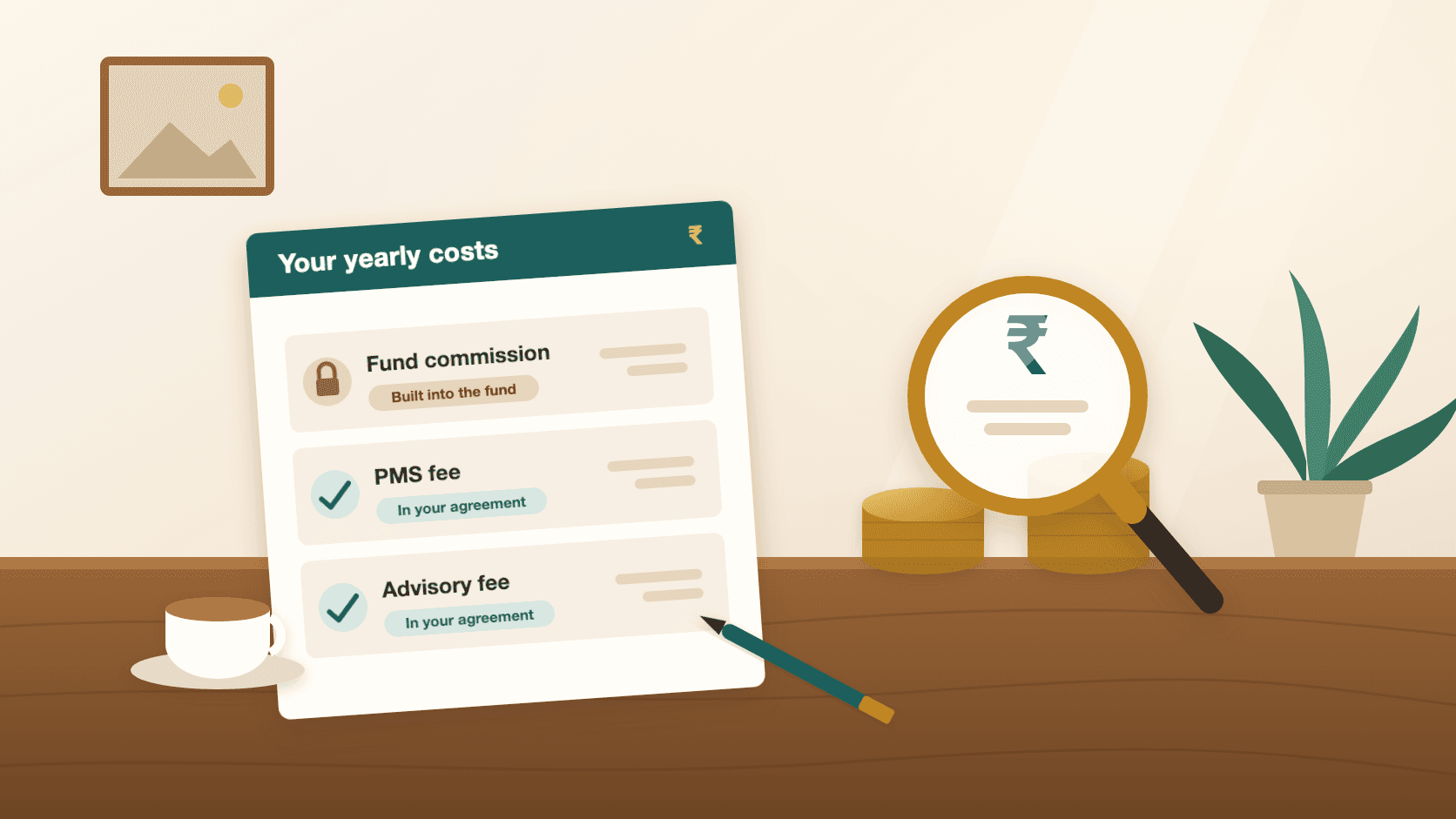
Are Private Banking Fees Negotiable in India?
Private banking and wealth fees in India: which are negotiable, which are set by rules, SEBI's limits, and how they compare with fee-only advice.
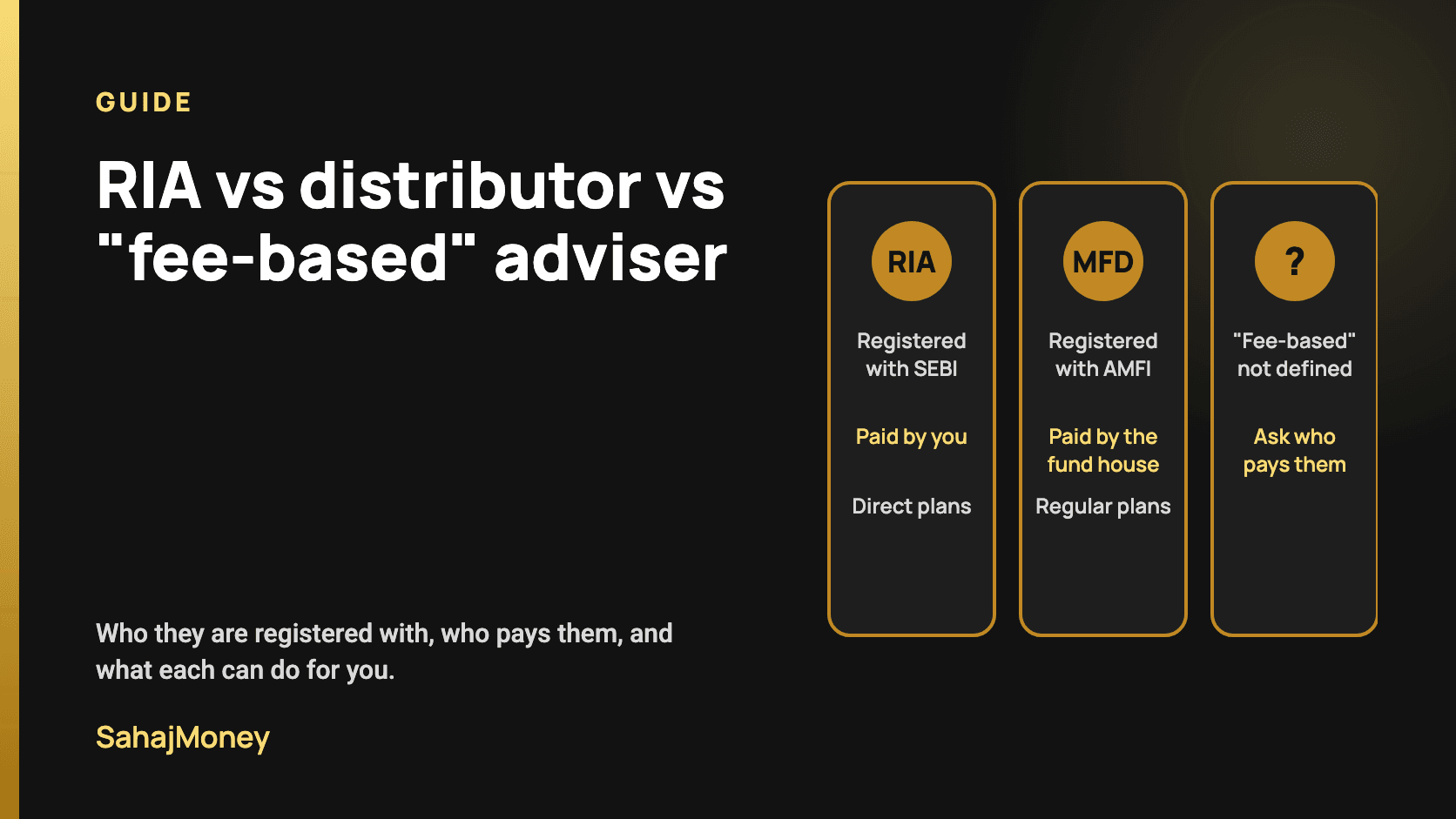
RIA vs Distributor vs Fee-Based Adviser
How SEBI Registered Investment Advisers, mutual fund distributors and "fee-based" advisers differ: registration, who pays them, and what each can do.
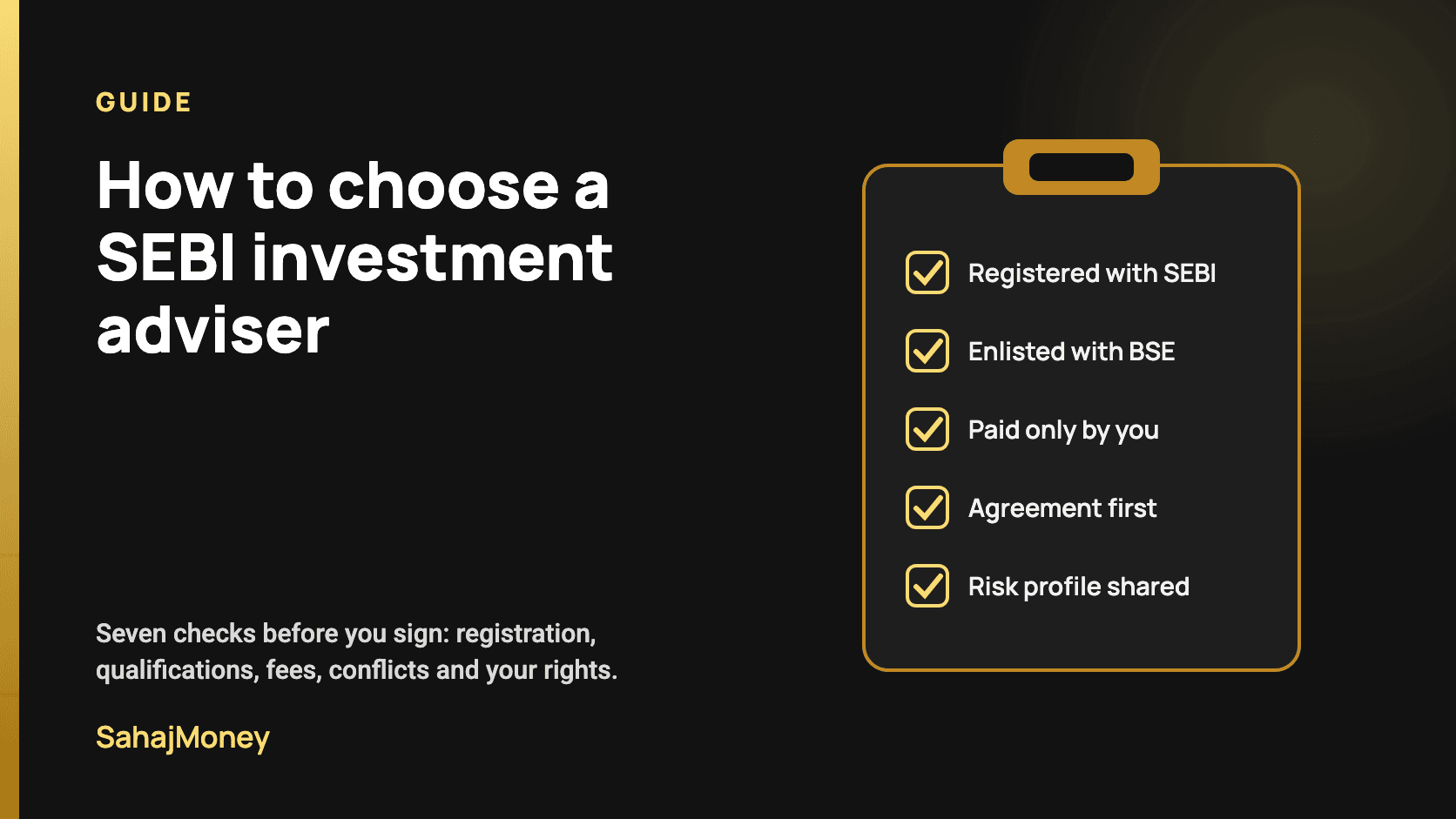
How to Choose a SEBI Investment Adviser
Seven checks before you hire a SEBI Registered Investment Adviser: registration, qualifications, fees, conflicts, the agreement and your rights.
Tailored Financial Advice At a Price You Can Afford!
Speak to SahajMoney® advisor today to achieve your financial goals with confidence.